and The Future of Global Order
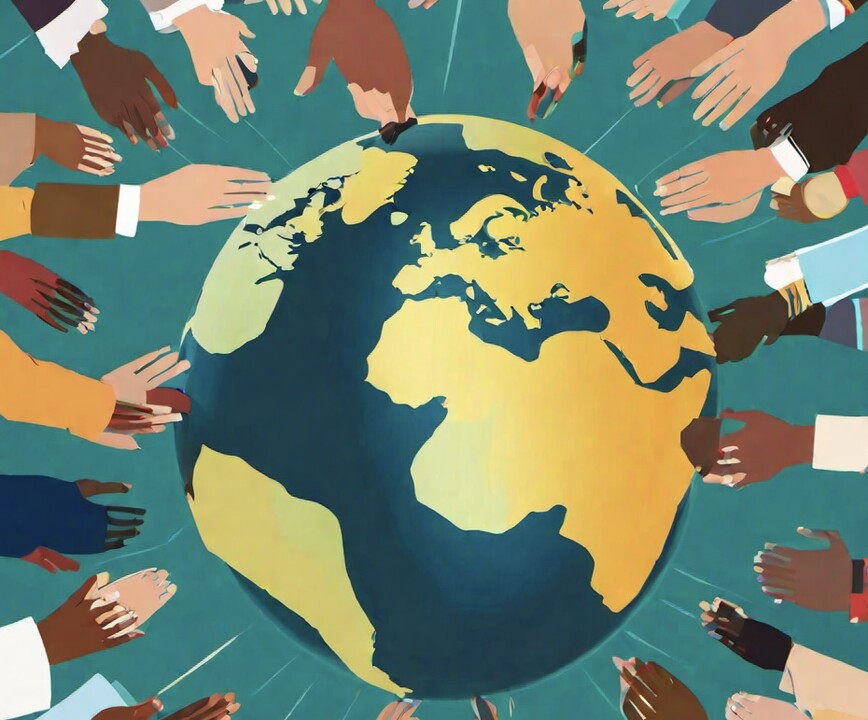
Transnational political networks – groups of individuals who transcend national boundaries – are major forces shaping global order, even despite great power competition. They have championed groundbreaking ideas for international cooperation across a wide range of issue areas, such as climate change, nuclear weapons, and outer space.
This project breaks new ground in the investigation of transnational political networks through uncovering the types of networks that matter and how they gain influence. At both the societal and elite levels, certain networks have social power, derived from the legitimacy of their ideas, which are often ultrasocial in nature (i.e. inclusive, empathic, and aimed at the common good), global, and transformational.

Given that the future is unwritten we, as humans, have agency to shape it. The primary way that we begin to influence the future is through the power of ideas, but these ideas need to be amplified and translated into policymaker action. A transnational knowledge-based network that reaches consensus on a particular problem, such as regulations on arms control, gains power by virtue of its recognized expertise. A societal movement that spreads across borders and champions a pioneering idea – such as the 1920s spaceflight movement – eventually moves an idea from the fringe to the mainstream.
This project investigates why certain transnational political networks achieve (or fall short of) breakthroughs in international cooperation that were previously thought impossible; identify emerging issue areas where their impact is being felt, and translate that knowledge into practical steps that empower these actors to contribute to solutions to disruptions in global order.
Case studies in-progress: (1) marine bio-diversity in the high-seas, (2) anti-microbial resistance, (3) rights of nature, (4) opposition to authoritarianism and support of Ukraine, (5) end of privateering, (6) artificial intelligence, (7) radiation protection, (8) Polynesian voyagers (Hokule’a) and protection of the Oceans, (9) indigenous organizations of the Amazon basin, (10) protection against risk caused by China.
Supported by a grant from Carnegie Corporation of New York.
 Mai'a Keapuolani Davis Cross